Lothar von Falkenhausen: Archaeological Perspectives on the Economic Transformation of China during the First Millennium BCE
Abstract
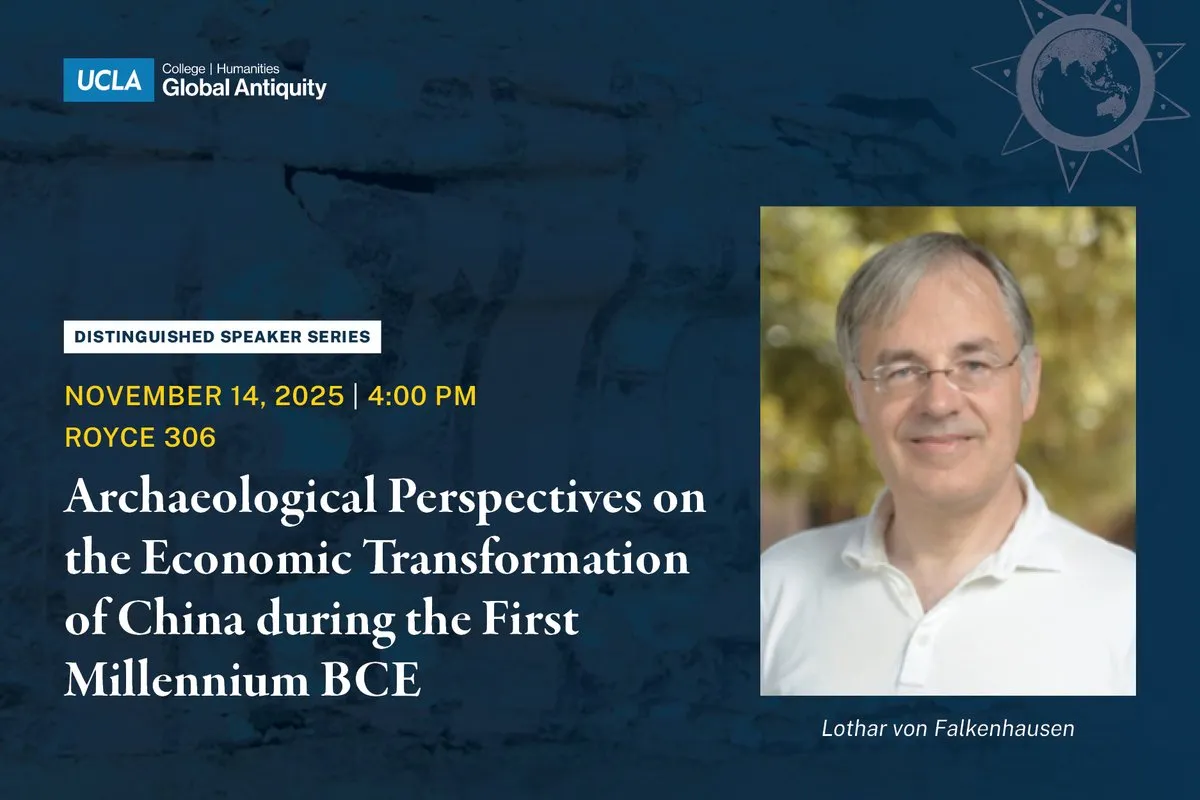
Archaeological Perspectives on the Economic Transformation of China during the First Millennium BCE
Starting about the middle of the first millennium BCE, continental East Asia experienced an unprecedented economic florescence as the Bronze Age redistributive economy gave way to a full-fledged market economy. In this new economy, metallic currency was beginning to play an important role. Technological innovations and intensification in the rural sector enabled significant demographic growth: the number of cities multiplied, and as their function morphed from elite ceremonial centers to densely populated hubs of mass-production and trade, a new urban culture came into being. Rather than depending on an individual’s descent and kinship, social divisions were now mainly wealth-based, and the pervasive use of writing enabled new intellectual breakthroughs. Drawn from a forthcoming major monograph, this lecture surveys some of the currently available archaeological evidence of this transformation, tracing its preliminary stages back to the beginning of the first millennium BCE and following its development down to the onset of China’s imperial age. In keeping with the spirit of “Global Antiquity,” possible connections with other parts of Eurasia will be touched upon.
Event Video
Lothar von Falkenhausen, University of California, Los Angeles
About the Speaker

Lothar von Falkenhausen
University of California, Los Angeles
Lothar von Falkenhausen is Distinguished Professor of Chinese Archaeology and Art History at UCLA, where he has taught since 1993. He is also on the faculty of the Cotsen Institute of Archaeology at UCLA, of which he served as Associate Director from 2004 to 2014, and he holds a concurrent part-time appointment as Visiting Professor at Xibei Uni- versity in Xi’an, China. Falkenhausen was educated at Bonn University, Peking University, Kyoto University, and Harvard University, receiving his PhD in anthropology from Harvard in 1988. His research mainly concerns the archaeology of Bronze Age China, focusing on large interdisciplinary and historical issues on which archaeological materials can provide significant new information. His major books are Suspended Music: Chime Bells in the Culture of Bronze Age China (1993) and the award-winning Chinese Society in the Age of Confucius (1000-250 BC): The Archaeological Evidence (2006). The current lecture coincides with the release of his new monograph, Economic Trends in China During the Age of Confucius: The Archaeological Evidence, to be published with the Cotsen Institute of Archaeology Press. Falkenhausen has served as co-Principal Investigator and Instructor of Record for archaeological projects and field schools and received numerous honorary professorships and fellowships.