Video
Connected Pasts, Modern Entanglements: Current Problems and Future Directions for Assyriology
Abstract
Assyriology remains a relatively new discipline (at least by academic standards). Although the memory of Mesopotamia is found throughout Classical and biblical material, the discipline itself is rooted in the excavations of major sites in Iraq beginning in the mid-1800s onwards, and the decipherment of Akkadian in 1857 unlocked the vast array of cuneiform texts. These early efforts were inextricably intertwined with biblical studies, as some of the first cuneiform texts to be translated concerned events known from the Hebrew Bible. Assyriology thus exists as a relatively young field that has only even more recently begun to stand entirely on its own. As a result of ongoing excavations and the durable nature of the tablets themselves, Assyriology is also a field in a constant state of flux: there are far more texts than scholars to read them, and entirely new material is published every year. Additionally, it requires extensive training to work with this vast corpus, one that stretches over two thousand years, multiple languages, different genres, and perhaps a million tablets in museum collections, some half of which have never been published. This paper analyses the complicated history and challenges of the field and argues that, to thrive, Assyriology must work to bridge the gap between the production of difficult, specialized knowledge and more general public scholarship, entangling itself again—if willingly, this time—to work in other fields and new directions of study.
Citation
Konstantopoulos, Gina. “Connected Pasts, Modern Entanglements: Current Problems and Future Directions for Assyriology,” Global Antiquity: Whither Global Antiquity (April 10, 2025).
About the Speaker
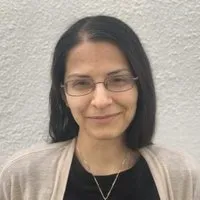
Gina Konstantopoulos
University of California, Los Angeles
Gina Konstantopoulos (PhD, University of Michigan, 2015) is Associate Professor of Assyriology and Cuneiform Studies in the Department of Near Eastern Languages and Cultures at UCLA. Her research centers on religion, magic, and literature in Mesopotamia, with a focus on the role of demons and monsters. Her recent monograph on this topic, The Divine / Demonic Seven and the Place of Demons in Mesopotamia, was published in 2023 by Brill. Her current research is on the creation of distant and imagined lands and notions of space and place in the ancient Near East, particularly the intersection of distant space and empire in the first millennium BCE. Konstantopoulos has authored numerous articles on demons and monsters in Mesopotamia, translations of Sumerian and Akkadian texts, and the reception of Mesopotamia in later pre-modern and modern contexts.