Video
Near Eastern Archaeology in an Age of Durable Disorder
Abstract
Beginning with US-led wars in Afghanistan in 2001 and continuing through the aftermath of the Arab Spring in 2011, Near Eastern archaeology has never faced such persistent and existential challenges. These events not only mark a tectonic shift in regions of study, but also a generation of change in approaches to archaeological fieldwork in the Near East. On the one hand, it has meant the rise of emphasis on programs of cultural heritage, which now seek local engagement and to create sustainable archaeological legacies within local communities. On the other, it would be difficult not to notice significant trends towards the inclusion of regions not previously given significant consideration in Near Eastern archaeology, even if ostensibly within its purview. Areas such as the Caucuses, Sudan, Ethiopia, Arabia, parts of North Africa, and Afghanistan have received renewed interest, even if they too cannot guarantee to sustain long-term research opportunities. While such efforts might be interpreted as noble strategies of resilience, these efforts are not without their own consequences in defining, if in a haphazard fashion, the aims and greater purposes of Near Eastern archaeology. In this presentation, I briefly entertain the consequences of our approaches to this discipline. I suggest that we must seek to be more deliberate in articulating our ultimate aims in defense of the discipline’s many contributions to the study of Global Antiquity, lest our best efforts be potentially co-opted to other ends.
Citation
Burke, Aaron. “Near Eastern Archaeology in an Age of Durable Disorder,” Global Antiquity: Whither Global Antiquity (April 10, 2025).
About the Speaker
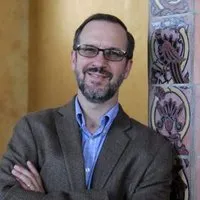
Aaron Burke
University of California, Los Angeles
Aaron A. Burke is Professor of Near Eastern Archaeology, the Kershaw Chair of Ancient Eastern Mediterranean Studies in the Department of Near Eastern Languages and Cultures, and a member of the Cotsen Institute of Archaeology at UCLA. Since 1994, he has excavated in Israel, Egypt, and Turkey, and he has traveled extensively throughout the Levant and the Mediterranean. He directs The Jaffa Cultural Heritage Project and is actively conducting research on the Early Iron Age in the southern Levant, ca. 1200–900 BCE. His research interests focus on the social history of the Levant and Eastern Mediterranean during the Bronze and Iron Ages with a particular interest in identity transformations in connection with warfare, forced migration, and long-distance exchange. In his first monograph,“Walled Up to Heaven”: The Evolution of Middle Bronze Age Fortification Strategies in the Levant, he addressed warfare during a period of Amorite political hegemony. More recently he is author of The Amorites and the Bronze Age Near East (Cambridge, 2021), which reconstructs a history of the evolution of Amorite social identity from 2500 to 1500 BCE. Since 2021, he is also series editor for Elements in the Archaeology of Ancient Israel, published by Cambridge University Press.