Video
Unveiling the Mystery of the First Dynasty: An Integrative Approach to the Archaeology of Early China
Abstract
This paper provides a critical examination of the competing narratives surrounding the search for the legendary first dynasty in early China, focusing on the scholars caught between these ideological poles and the shifting debates revolving around this topic. In exploring the ways both nationalist agendas and Western skepticism have shaped historical interpretations, the paper highlights the tension between the state’s desire to project itself into ancient history and the Western tendency to dismiss the Xia dynasty as mere state propaganda. Drawing on these contrasting views, this paper argues that such polarized perspectives have limited the scholarly understanding of the Xia and its place in the broader historical context. In light of these ideological conflicts, it explores the potential for a more balanced and global approach to ancient Chinese history—one that transcends these entrenched narratives and encourages a nuanced, inclusive examination of antiquity. Through a careful analysis of how scholars have navigated these issues in the past and how they might do so in the future, this paper calls for a shift towards a more open, integrative approach to the study of ancient civilizations.
Citation
Li Min. “Unveiling the Mystery of the First Dynasty: An Integrative Approach to the Archaeology of Early China,” Global Antiquity: Whither Global Antiquity (April 11, 2025).
About the Speaker
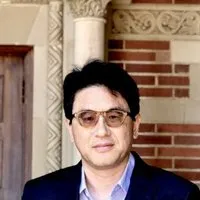
Li Min
University of California, Los Angeles
Li Min’s major field of research is the archaeology of prehistoric and Bronze Age China, focusing on state formation, social memory, storytelling, place-making, and religious and social responses to climatic change. He also studies the maritime archaeology of the Asiatic Trade in the Early Modern Era (13-17th centuries), using research on ceramic production and trade in coastal China and Southeast Asia to document the transformations in material culture brought by the inauguration of early global trade.
His most recent book is Social Memory and State Formation in Early China, published by Cambridge University Press in 2018.